Small Business Does Not Mean Small Payment Needs
A business doesn't need hundreds of employees to receive payments every day.
Consider a small graphic design business.
It might receive payments for:
- Logo design
- Posters
- Business cards
- Social media graphics
- Website design
- Branding packages
Even if the business serves only a handful of customers each week, payment is still an important part of its operations.
Now imagine a customer visits the company's website and wants to purchase a service.
The customer should ideally be able to understand:
What am I buying?
How much does it cost?
How do I pay?
What happens after I pay?
A good payment experience can make those answers much clearer.
1. Make It Easier for Customers to Pay
Customers value convenience.
If someone wants to pay for your service but has to contact you on WhatsApp, wait for your response, ask for payment details, make the payment, take a screenshot, and send the screenshot back, there are many steps involved.
Payment integration can reduce unnecessary back-and-forth.
For example:
Select service
↓
Enter details
↓
Choose M-Pesa
↓
Complete payment
↓
Receive confirmation
The exact payment experience depends on the business and the payment solution being used, but the principle is simple:
Make payment easy.
2. You Don't Need Thousands of Customers
One common misconception is that payment integration only makes sense when a business has a large number of customers.
That's not necessarily true.
Imagine a small consulting business that gets only 20 clients a month.
If every client makes a payment, the business already has 20 transactions to manage.
Now consider a business with:
- 50 customers
- 100 customers
- 300 customers
The number of payments quickly adds up.
The purpose of integration isn't necessarily to handle millions of transactions.
It can simply be about making everyday transactions easier and more organized.
3. Reduce the "Have You Paid?" Problem
Small businesses often communicate directly with customers.
That personal relationship is valuable, but it can also create repetitive administrative work.
A customer might send:
"I have paid."
The business then has to check whether the payment arrived.
Another customer might send:
"Here is the screenshot."
Someone has to verify it.
Another customer might ask:
"Did you receive my payment?"
This becomes difficult when the business starts receiving more orders.
A connected payment system can help associate payments with the relevant customer, order, booking, or service.
That means fewer unnecessary conversations about whether a payment has been received.
4. Improve Your Record Keeping
A small business needs good records just as much as a large business does.
Knowing how much money came in isn't always enough.
You may also want to know:
- Which customer paid?
- What did they pay for?
- How much did they pay?
- When did they pay?
- Which orders have been paid?
- Which orders are still pending?
When payments are connected to your business system, these records can be easier to organize.
This can be particularly useful when preparing financial reports or reviewing business performance.
5. Give Your Business a More Professional Experience
A small business can still provide a professional digital experience.
A customer shouldn't have to assume that a business is small simply because it has fewer employees.
For example, imagine two businesses offering the same service.
Business A
The customer sends a WhatsApp message, waits for payment instructions, sends money, and sends a screenshot.
Business B
The customer visits the website, selects the service, enters their information, pays, and receives confirmation.
The size of the businesses may be similar.
But the customer experience can feel very different.
Professional digital processes can help a small business present itself confidently.
6. Your Website Can Do More Than Display Information
Many small businesses have websites that essentially say:
"Here is who we are."
"Here are our services."
"Here is our phone number."
That's useful, but a website can potentially do much more.
Depending on the business, it can allow customers to:
- Request a service
- Make a booking
- Place an order
- Pay a deposit
- Purchase a product
- Register for an event
- Make a donation
- Subscribe to a service
- Receive confirmation
This turns the website from a digital brochure into part of the business operation.
7. Small Online Stores Need Payment Integration
Imagine someone selling products through social media.
A customer sees a product on Instagram or WhatsApp and wants to purchase it.
The seller then has to:
- Explain the price.
- Send payment instructions.
- Wait for payment.
- Confirm the payment.
- Record the order.
- Arrange delivery.
This can work when the business has a small number of orders.
But as orders increase, manual processes become harder to manage.
An online store connected to a payment system can bring several of these steps together.
The customer can select the product, provide their details, and make the payment through the website.
8. Small Hotels and Accommodation Businesses Can Benefit Too
Payment integration isn't limited to online shops.
Consider a small hotel or guesthouse.
A customer might want to:
Choose a room → Select dates → Make a booking → Pay a deposit
Without an integrated system, the hotel may have to handle each step manually.
A digital booking and payment process can make the experience easier for both the guest and the hotel.
This can also reduce confusion around which bookings have been paid for.
9. Professional Services Can Use Payment Integration
A small professional service business can also benefit.
For example:
Accountant
A client books a consultation and pays the consultation fee online.
Consultant
A client selects a service and pays a deposit before work begins.
Photographer
A client makes a booking and pays a booking deposit.
Designer
A customer purchases a design package and pays online.
Mediator
A client requests a service and makes the required payment through the website.
The business doesn't need to be an enormous company for these processes to be useful.
10. NGOs and Community Organizations Can Benefit
Small NGOs and community organizations may also receive payments or donations.
A website can provide supporters with a convenient way to contribute.
Instead of simply displaying payment instructions, the organization can create a more organized donation experience.
For example:
Choose donation amount → Enter details → Pay → Receive confirmation
This can make supporting the organization more convenient.
11. Payment Integration Can Save Time
For a small business owner, time is valuable.
You may already be responsible for:
- Marketing
- Customer service
- Sales
- Accounting
- Deliveries
- Managing employees
- Managing suppliers
- Running the website
If payment processes require constant manual checking, they consume time that could be spent elsewhere.
Automation can help reduce repetitive administrative tasks.
It doesn't replace the need for financial oversight, but it can make routine processes easier to manage.
12. It Can Help a Business Grow
A small business today may not remain small forever.
You might start with:
10 orders per month
Then grow to:
50 orders
Then:
200 orders
Your business systems should ideally be able to grow with you.
Building better payment processes early can make it easier to handle increasing activity later.
This is one reason scalability matters even for smaller businesses.
13. Digital Payments Are Becoming Part of Modern Business
Digital payments aren't just a feature for large corporations.
The World Bank has highlighted merchant acceptance as an important part of expanding digital payments, particularly among smaller businesses.
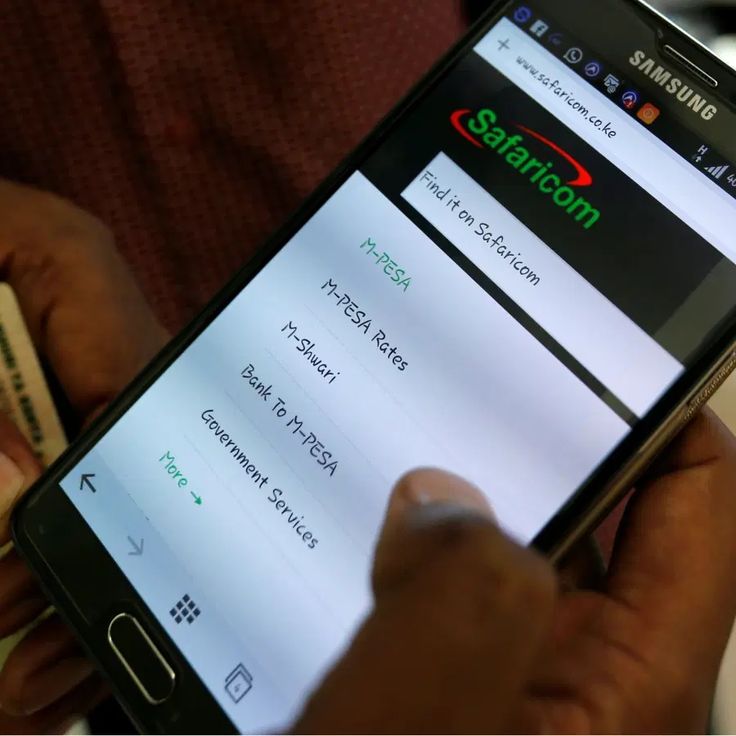
In Kenya, M-Pesa has become deeply integrated into everyday business activity. Safaricom has also continued developing business-focused payment services and APIs that enable third-party integrations.
That means small businesses have an opportunity to participate in a broader digital economy rather than waiting until they become large companies.
14. You Don't Have to Start With a Complicated System
Payment integration doesn't necessarily mean building a huge platform.
A small business could start with something simple.
For example:
Website → Service selection → Payment → Confirmation
Later, the business could add:
Customer accounts
Invoices
Booking management
Order tracking
Payment history
Business reports
The important thing is to build according to the business's actual needs.
15. Payment Integration Can Work Alongside Existing Channels
Adding online payment functionality doesn't mean you have to stop using WhatsApp, phone calls, or physical payments.
These channels can continue to serve customers.
The website simply gives customers another convenient option.
For example:
Customer discovers business on social media
↓
Visits website
↓
Selects service
↓
Pays online
↓
Business receives order
Social media, the website, and payment system can work together rather than operating as completely separate channels.
What About a Business That Only Has a Few Customers?
Even then, payment integration can still be useful if it solves a real problem.
But it doesn't mean every small business must have a sophisticated payment system.
If a business receives very few payments and its current process works well, investing in a complex system may not be necessary.
The better approach is to consider:
- How many payments do we receive?
- How much time do we spend confirming payments?
- Do customers struggle to pay?
- Do we need better records?
- Are we planning to sell online?
- Are we planning to grow?
- Would automation save us time?
The right solution should match the business.
Payment Integration Is About Convenience, Not Company Size
The biggest misconception is that payment integration is about being a "big company."
It isn't.
It's about creating a better way for customers to complete transactions.
A small business can have:
10 employees
and still provide a sophisticated customer experience.
A business can also have:
one owner
and still operate professionally online.
Technology should not only be available to the biggest companies.
It should help smaller businesses compete, serve customers better, and spend less time on repetitive tasks.
A Simple Example
Consider a small cake business.
Without an integrated payment process:
Customer sees cake online.
↓
Customer sends WhatsApp message.
↓
Business confirms price.
↓
Business sends payment details.
↓
Customer pays.
↓
Customer sends screenshot.
↓
Business confirms payment.
↓
Business records order.
With a connected website:
Customer selects cake.
↓
Chooses delivery details.
↓
Confirms order.
↓
Makes payment.
↓
Payment is recorded.
↓
Order is confirmed.
The second process doesn't necessarily eliminate all human interaction.
It simply removes some unnecessary administrative work.
Start Small and Grow
Small businesses don't need to build everything at once.
A practical approach could be:
Stage 1
Website + M-Pesa payment
Stage 2
Orders + payment records
Stage 3
Customer accounts + invoices
Stage 4
Business dashboard + reports
Stage 5
Additional payment methods and integrations
The system can evolve as the business evolves.
Final Thoughts
Payment integration shouldn't be viewed as something reserved for banks, supermarkets, large corporations, or major e-commerce platforms.
A small business can benefit from the same basic principle:
Make it easy for customers to do business with you.
Whether you sell clothes, provide professional services, run a hotel, offer consultations, organize events, operate a small online store, or run a community organization, a convenient payment process can improve the customer experience and reduce unnecessary administrative work.
You don't need thousands of customers to start thinking digitally.
You simply need to identify where technology can make your business simpler, faster, and more convenient.
At Ziro Creative Agency, we help businesses of different sizes build websites and digital systems that connect services, customers, and payments in one convenient experience.
Your business may be small today. Your digital experience doesn't have to be.